A bundle saves money when its wanted contents cost less than buying those same contents separately. Box size and claimed retail value do not establish your saving.
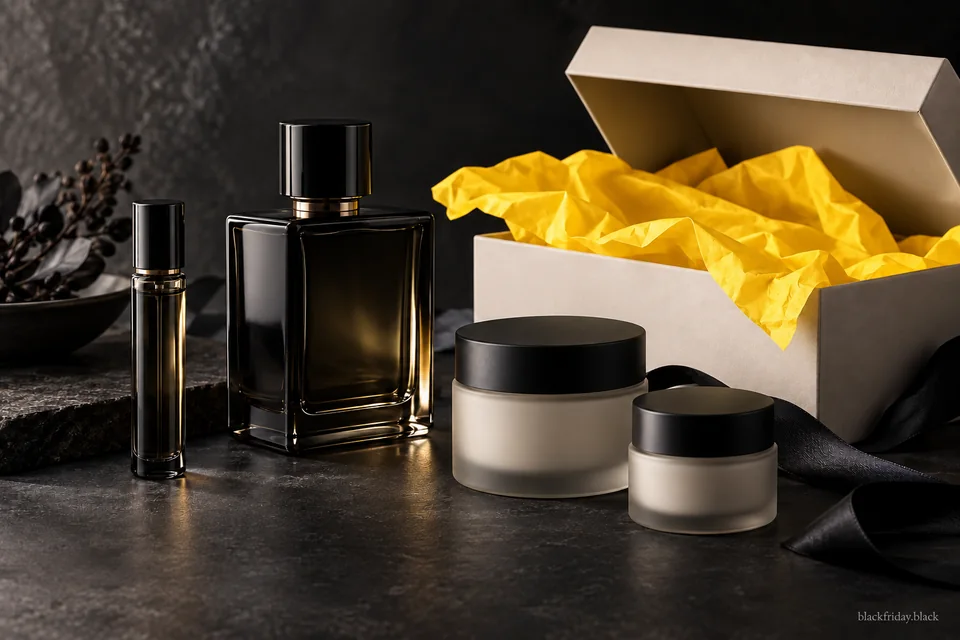
A beauty bundle is good value when it contains products you want, in sizes you can use, for less than the sensible alternative. A box filled with unwanted shades and tiny extras is not a bargain just because the printed “worth” figure is large.
Start with the item that made you look at the set. Find its exact name, formula, shade and size. Check what that same item costs separately from a suitable seller. Then ask what the other contents add to your routine or the recipient’s routine. This simple order prevents the packaging from doing the thinking for you.
You do not have to put a money value on every bit of enjoyment. A beautiful set can be a lovely treat. The useful distinction is between choosing a treat and claiming that it saved money on purchases you were never going to make.
Read the contents before the value claim
Open the full contents list. Product photographs can make a miniature look much larger than it is. Record the amounts in millilitres or grams, the number of individual items and whether an accessory is included or merely shown in the picture.
Check the exact version. A moisturiser for one skin type may have a similar name to another formula. A shampoo and conditioner are different products, even if their bottles match. A foundation shade that is wrong for you has little practical value. “Full size” is also a description, not a standard quantity shared by every brand.
A useful comparison note might read: one 50 mL jar of my usual cream, one 15 mL cleanser I want to try and a makeup bag I do not need. That tells you more than “three-piece premium gift set”.
Check whether the contents in your market match the listing you are reading. A set sold under a similar name elsewhere may contain different sizes or formulas. Buy against the actual seller’s contents list, and keep a copy with your order.
Separate wanted, trial and unwanted products
Give each item a job. Wanted products replace spending you would otherwise make. Trial products offer a chance to try something. Unwanted products add no saving to your personal comparison.
| Kind of item | How to value it |
|---|---|
| Your usual product in the right shade or formula | Compare the same amount at a current separate price |
| A new product you planned to try | Compare with the trial size you would realistically buy |
| A miniature you will take on a trip | Give it value only if that format solves a real need |
| An extra you will not use | Count no replacement saving |
| Gift packaging you particularly want | Treat it as part of the gift’s appeal, not as skincare quantity |
Do not count an item at full retail value just because the box does. If a 10 mL miniature has no realistic standalone purchase for you, a seller’s estimated value is not money you saved.
Be honest about giving extras away too. “I can give that to someone” can be useful if you know who wants it. A pile of possible future gifts is still a pile of products you paid for today.
Compare unit prices only for matching products
Unit price means the cost for a common amount, such as 1 mL, 100 mL or 1 g. It helps compare sizes of the same product. Divide the price by the amount, using the same units for both choices.
Here is a hypothetical example. A 50 mL cream costs £30, or £0.60 per mL. A 75 mL jar of the same cream costs £39, or £0.52 per mL. The larger jar has a lower unit price but costs £9 more today. It is better value only if you want and will use the extra amount.
You can also compare both per 100 mL: £60 and £52. The result is the same. Pick the unit that makes the numbers easy to read.
Do not divide the price of a mixed box by all the liquid inside. Perfume, face wash and body lotion do different jobs and have different values. A set with 200 mL of cheap lotion is not automatically better than one with 50 mL of the perfume you want. Formula and concentration must match before volume becomes a fair comparison.
Work out what the bundle really saves
Use the current prices of wanted items, rather than an old reference price or the most expensive seller you can find. Include delivery once for the actual order. A separate-product comparison may need delivery from two shops; another may qualify for free delivery at one shop. Compare what you would actually pay.
Hypothetical example: your usual cream is £32 delivered. A cleanser you genuinely need is £10 delivered with the cream. A bundle containing both plus an unwanted accessory costs £38 delivered. The realistic separate purchase is £42, so the bundle saves £4. The accessory does not need an invented value to make the deal work.
Change the situation and the answer changes. If you do not need the cleanser, the real alternative is the £32 cream. Paying £38 for the bundle increases spending by £6. You might enjoy trying the cleanser, but you have not saved £4 on your existing needs.
A threshold offer can also change the result. If you must add £12 of unwanted products to get £5 off or free shipping, include the extra £12. Do not compare the checkout discount while hiding the purchase needed to unlock it. Our discount guide covers these conditions more broadly.
Buy an amount that fits your actual use
Think about what is already open at home. If you use one cleanser slowly, a set containing three more may create stock that sits around. A smaller set can be better than a lower unit price on an amount you cannot use sensibly.
Estimate use from your own routine. If a bottle normally lasts you several months, use that observation to judge how long the bundle would cover. Do not double your usual use just to make a large set look sensible. You also do not need to force a new product into your routine because it came in the box.
Travel sizes have a different job. A small container can be useful for luggage, a gym bag or trying an unfamiliar formula. That convenience may matter more than its unit price. Compare it with the compact option you would otherwise buy, rather than automatically marking every miniature as poor value.
Keep label instructions, storage and product age in the decision. A heavily discounted set from an older collection is not automatically unsafe, but it deserves a clear answer about condition and stock history if those affect your choice.
Expiry and opening are product-specific
Do not assume every cosmetic lasts the same number of months. In the US, ordinary cosmetics generally do not have to carry an expiry date under the same rules as drugs. That does not mean they last forever. The FDA says the manufacturer is responsible for determining shelf life, and products that are also drugs have additional requirements.
Follow the actual label and manufacturer guidance in your market. An open-jar symbol, where present, describes a period after opening; it does not by itself tell you the age of unopened stock. Do not use a general internet rule to override a date or instruction on the product.
Keep products in the conditions the maker recommends. Heat, sunlight and repeated handling can matter. If a product’s condition changes or the label gives a reason to stop using it, follow appropriate product guidance. This buying method is about sensible quantities; it is not a skincare treatment plan.
If you need to avoid a particular ingredient, check the exact current formulation. A familiar name, old review or picture of earlier packaging cannot settle that question. Ask the manufacturer when the information is unclear.
A gift needs the recipient’s preferences
For a gift, start with products the person already enjoys. Their favourite cream or exact fragrance can be a safer choice than a mixed set chosen only for the number of items. Shade, texture and scent are personal. A prestigious brand does not remove the risk of picking the wrong one.
If you do not know a preference, a smaller known favourite, a clearly usable accessory or a flexible gift option may be more helpful. If you choose a gift card, check where it works, any expiry and fees, rather than treating every card as equivalent to cash.
Check the return policy before paying. An unopened set, a broken hygiene seal and a faulty product can fall under different rules. Do not open individual items for wrapping until you understand the effect. Our gift returns guide helps line up delivery, opening day and the seller’s deadlines.
For perfume, use the fragrance gift set guide. Matching the scent name alone can miss a different concentration, bottle type or refill format.
Check the seller and the final basket
Verify who sells and sends the set, whether it is new and sealed, and what happens if the contents differ from the listing. A marketplace product page may have several sellers. The first photograph and brand name do not establish the seller’s identity. Our marketplace seller check explains that distinction.
At checkout, confirm the exact set, quantities, delivered cost and any coupon conditions. Keep the listing, order and applicable policy. When it arrives, check the outer condition and contents using the seller’s permitted process, particularly if the gift will be stored until later.
A good beauty bundle is easy to explain without its “worth” label: you want these products, these sizes fit your use, and this total is sensible beside the separate purchase. If the deal needs unwanted extras to receive imaginary values, the simpler purchase is often the better one.
The same useful-item principle applies when the promotion includes unrelated products or a gift with purchase. Our wider bundle-value guide explains how to compare only the contents you would use and check what happens if part of the set needs to go back.