Choose for your everyday drinks and cleaning tolerance, then compare the machine, coffee system and accessories over the same number of cups.
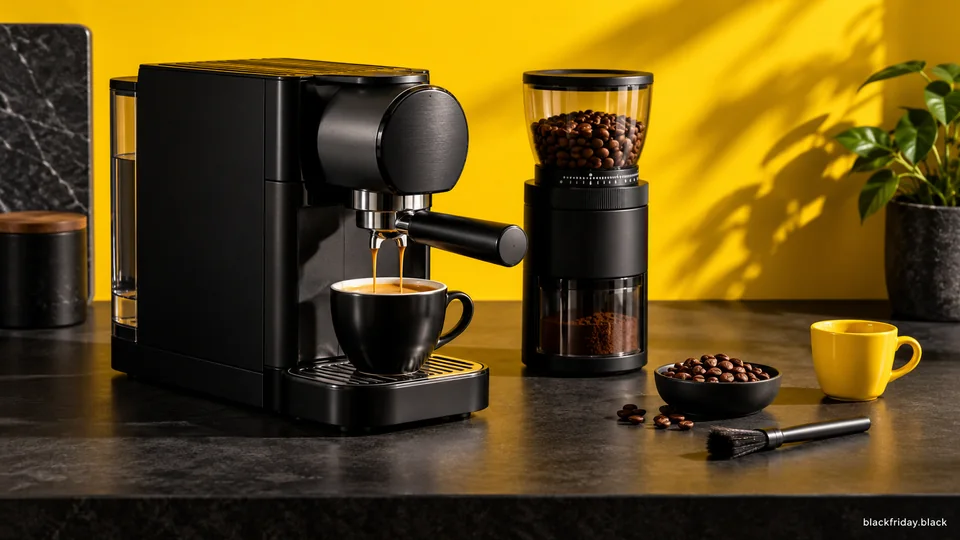
The best coffee machine deal is the system that makes the drinks you enjoy, fits your morning routine and remains affordable after you buy it. A large reduction on the machine can be outweighed by capsules, a missing grinder, cleaning supplies or a milk system you stop using because it takes too much effort.
Start with what you already drink. A household sharing a pot of black coffee needs something different from one person making a quick capsule espresso or an enthusiast adjusting freshly ground beans. More buttons and a higher original price do not make those needs interchangeable.
The comparison below is about choosing a working setup. It does not claim current Black Friday prices or hands-on tests. All example costs are hypothetical so you can replace them with the local prices and habits that apply to you.
Describe an ordinary morning before looking at a machine
Write down the number of drinkers, their usual drinks and how close together they want them. Include the difference between weekdays and weekends. A machine that is enjoyable for one careful Saturday espresso can be frustrating when three people need milk drinks before leaving for work.
Also identify who will clean it. A promise that “we will all help” is less useful than a realistic account of what happens after breakfast. Making a drink and restoring the machine for the next person are parts of the same task.
Think about cup size. A large mug of black coffee is not automatically the same drink as a long extraction through espresso grounds. An espresso-based machine may prepare a shorter coffee and add hot water instead. Read how the exact model makes your drink rather than assuming its “large cup” button reproduces the coffee you currently like.
For milk drinks, decide whether you want to texture milk yourself, use a separate frother or have an automatic carafe. Each route changes the setup and cleaning. Someone happy to drink black coffee should not pay for an elaborate milk system just because it appears in a discounted bundle.
Four systems, four different kinds of ownership
| System | The useful reason to choose it | The ownership question to resolve |
|---|---|---|
| Capsule or pod | A defined portion and convenient preparation for the drinks supported | Are the exact compatible capsules affordable and available, and how will you make milk drinks? |
| Filter machine | Preparing a batch of black coffee without pulling separate espresso shots | What quantity will you actually drink, and does the basket and jug arrangement suit you? |
| Manual or semi-automatic espresso | Control over grinding, dose and extraction with a hands-on workflow | Does the full budget include a suitable grinder, and will you enjoy learning and cleaning? |
| Automatic bean-to-cup | Grinding beans and preparing supported drinks with more steps handled by the machine | What maintenance remains, and can it serve your drinks comfortably in sequence? |
These are starting points, not universal rankings. One household may value the predictable routine of a capsule machine; another may value a simple pot of filter coffee. The right bargain improves your existing habit instead of requiring a different personality.
Capsule compatibility can matter more than the machine discount
Identify the exact capsule system. “Coffee pods” is not a universal format, and two products from a familiar brand may use different systems. Do not count every capsule on a shop shelf as a compatible choice.
Compare the price of the capsules you would actually drink, including delivery or the minimum order needed to obtain them. A large multipack looks inexpensive per capsule only if you like its contents and use them while they remain suitable. Variety packs with flavours you dislike can be a less useful saving than a small pack of your usual coffee.
Check how many capsules your chosen drink uses. A coffee-and-milk system may use more than one portion for a single drink. If a drink uses two capsules, a price per capsule is only half of the ingredient calculation. A separate milk frother has its own initial cost and cleanup.
Look at the waste route too. Establish whether a collection or recycling option is available where you live, what preparation it requires and where used capsules will wait. Do not assume that a recyclable material means the whole used capsule can go in your ordinary household bin.
Subscription incentives need their own calculation. A discounted machine tied to minimum capsule spending is a package commitment. Count the full required payments and decide whether you would buy that quantity without the machine incentive. Our annual versus monthly subscription guide explains how a lower initial payment can hide a larger commitment.
Espresso buyers need a grinder plan
A machine does not make every kind of ground coffee behave the same way. The basket holds the coffee during brewing; its design influences how demanding the preparation is.
For a specific example, the Sage Barista Express manual distinguishes single-wall baskets for freshly ground beans from dual-wall baskets suited to pre-ground coffee. This distinction is useful when reading a candidate’s instructions, but basket names and supplied parts must be checked on the exact model.
If you intend to use freshly ground beans for espresso, include a grinder designed for that job and able to make useful adjustments. A grinder you already own for coarse coffee may not supply the control your espresso setup needs. Do not spend the entire budget on the brewer and then discover that the remaining grinder option cannot support the intended workflow.
A built-in grinder can simplify the footprint and purchase. A separate grinder can be useful if you want to change the brewing machine later or grind for another method. Compare the combined cost and space rather than treating either arrangement as inherently superior.
Include the accessories the actual workflow needs. A milk jug, suitable tamper, scale or cleaning tools may be supplied, required or optional. Read the contents list before adding them all to a shopping basket. A large accessory bundle has little value if its basket, tamper or filter does not fit your machine.
For a gift, avoid assuming the recipient wants a new hobby. A manual espresso setup asks for learning, adjustment and repeatable preparation. If the recipient wants a fast familiar drink, convenience may be the more important feature.
Milk drinks expose the gap between “automatic” and effortless
An automatic carafe can prepare a supported milk drink without manual steaming, but milk still leaves components that need attention. A steam wand gives you more direct control but requires learning and cleanup. A separate frother adds another container and another item to wash.
Look at the daily sequence in the manual: remove milk, run the specified rinse, dismantle relevant parts, clean and store them. Identify which parts may go in a dishwasher rather than assuming the entire carafe can. Also look at whether the setup makes one drink at a time and how the machine changes between brewing and steaming.
De’Longhi’s UK care guide includes cleaning the milk carafe or steam wand after use and further cleaning of milk components. The practical buying lesson is to price your willingness to do the work. That guide is not a universal cleaning schedule for machines from other manufacturers.
A menu with twelve drink names can look versatile even when your household uses only two. Prioritise how well the machine supports those two: cup clearance, preferred milk method, repeat preparation and the cleaning process. Extra recipes should earn their place through real use.
Calculate the cost of the coffee you will actually drink
Use the same number of finished drinks and the same period for each candidate. Count drinks consumed, not a theoretical maximum from the water tank or a promotional assumption of unlimited daily use.
For beans or ground coffee, calculate a dose cost from your planned recipe. In a hypothetical example, beans costing £20 per kilogram and a dose of 18 grams give an ingredient cost of £0.36. That is £20 multiplied by 18 and divided by 1,000. The dose is an example, not a required recipe for every machine or drink.
For capsules, use the number required per drink and the actual delivered price. Add milk if comparing milk drinks, then filters, cleaning supplies and other recurring costs. If one recipe uses more milk than another, use the real amount rather than silently giving both the same cost.
Here is a simplified hypothetical comparison over two years at two coffees per day:
| Input | Capsule setup | Bean-based setup |
|---|---|---|
| Complete starting setup | £100 | £400 |
| Assumed coffee ingredient cost per drink | £0.55 | £0.25 |
| Number of drinks | 1,460 | 1,460 |
| Coffee ingredient spending | £803 | £365 |
| Setup plus coffee | £903 | £765 |
The bean setup costs £300 more initially but saves an assumed 30 pence in coffee per drink. The simple crossover is 1,000 drinks: £300 divided by £0.30. At two per day, that is about 500 days. At two per week, it is about 500 weeks. This changes the purchase decision dramatically.
The table excludes milk, power, cleaning, filters, repairs and waste. Add the parts that differ in your real comparison. A crossover is a calculation under chosen assumptions, not a guarantee that a machine will last long enough or that you will enjoy its coffee.
Also count coffee discarded while adjusting a recipe, milk left over after frothing and a batch of filter coffee nobody drinks. A hypothetical cheap ingredient cost assumes the ingredient becomes a drink. Your habits determine how often that happens.
Do not treat every home coffee as a café purchase avoided
An expensive machine is often justified by comparing all home drinks with café prices. That only works if those drinks actually replace café purchases.
Suppose you usually buy three café coffees each week but make fourteen coffees at home. You cannot count all fourteen as café savings. Some are new consumption, while others replace a cheaper drink you already made. Separate those groups before calculating payback.
For a hypothetical £4 café drink replaced by a £0.60 home drink, the ingredient-level difference is £3.40. If you replace three such purchases weekly, that is £10.20 a week before accounting for the equipment and other costs. Use your actual replaced purchases, and accept that some café visits are about meeting someone or enjoying the place rather than simply obtaining coffee.
This does not mean buying a machine requires a financial saving. You may value the taste, ritual or convenience. It means the reason for purchase should be accurate. An enjoyable upgrade can stand on its own without an inflated payback story.
Cleaning, descaling and filters are different jobs
Coffee oils, milk residue and mineral buildup create different cleaning needs. A water filter does not make the other jobs disappear. Descaling deals with mineral deposits; cleaning procedures handle the parts and residues specified by the manufacturer.
Sage’s maintenance guidance lists the group head, steam wand, descaling and water filters as parts of maintenance. De’Longhi’s care guidance also connects setup to water hardness and the machine’s specified settings. Use the exact model’s procedure and approved products; do not substitute a household chemical or cleaning tablet based only on another machine’s instructions.
Before buying, find the replacement filter code, descaling product and any cleaning tablets needed. Price them locally and note whether a service task is owner-accessible. A removable brew unit and a non-removable unit can have different care arrangements. “Self-cleaning” should be read as a description of specific automated steps, not a claim that you never need to empty, rinse or dismantle anything.
Do not assign every machine the same descaling interval. Water, usage and the manufacturer’s instructions affect the schedule. If a candidate needs a hardness test during setup, include that step rather than setting the indicator to the lowest level simply to suppress reminders.
Make sure the machine fits while being used
Measure beyond the stated width and depth. You may need to lift a bean-hopper lid, remove a water tank, pull out a drip tray or detach a milk carafe. A machine fitting neatly under a cupboard can still require moving every time you refill it.
Allow counter space for preparation and cleaning. A separate grinder, knock box, milk jug and drying parts can occupy more room than the brewer. Capsule storage and used-capsule collection also need somewhere to live.
Check cup clearance using your actual mug, and confirm whether a removable tray changes it. For a filter machine, establish how the jug pours and how you access the basket. These small physical details decide whether the purchase becomes pleasant daily equipment or a chore.
For an imported offer, check the local electrical rating, plug, warranty support and consumable availability. A lower foreign product price is not the complete purchase. Our appliance cost guide covers the broader principle of pricing a usable installation.
Judge the Black Friday package at the end
Once you know the right system, compare the exact model and contents. A differently named version may omit the grinder, milk accessory or filter included in another listing. Keep guaranteed checkout reductions separate from cashback claims and recurring coffee commitments.
Use our guide to real discounts to evaluate the current total against suitable alternatives. If the offer already meets your needs and target cost, the name of the sale day is secondary. Our Black Friday versus Cyber Monday guide helps when you are considering waiting.
When the machine arrives, follow its initial setup and test the drinks you bought it for while the applicable return period is useful. Establish the grind, preparation and cleaning routine before judging the result from one hurried cup. For a gift, ensure the recipient can test it in time using our gift returns guide.
The worthwhile coffee machine deal makes sense after the discount banner is gone: the drink suits you, the routine fits your day, the supplies are affordable and the machine has a place in your kitchen that works.